
Fall Prevention Strategies for Older Adults: A Practical Guide to Safer Mobility and Independence
Falls can have a significant impact on an older adult’s health, confidence and independence. But falling is not an inevitable part of aging. With the right combination of exercise, clinical assessment, environmental changes and targeted intervention, older adults can take meaningful steps toward maintaining their mobility and reducing their risk of falls.
For physical therapists, senior living communities, rehabilitation providers and organizations supporting healthy aging, effective fall prevention starts with understanding that every individual has different needs.
A successful fall prevention strategy should do more than respond to a fall after it happens. It should identify potential risks early, address the factors contributing to instability and help older adults move with greater confidence.
Why Is Fall Prevention Important for Older Adults?
Falls are a major public health concern. According to the US Centers for Disease Control and Prevention (CDC), more than one in four adults aged 65 and older reports falling each year.
The consequences can extend well beyond physical injury. A fall may lead to reduced mobility, fear of falling, social isolation and a loss of confidence in everyday activities. Some older adults begin avoiding activities they previously enjoyed, potentially creating a cycle of inactivity, reduced strength and increased vulnerability.
For senior living providers and healthcare organizations, effective fall prevention can support resident well-being, safer mobility and continued independence.
The goal is not simply to prevent falls. It is to help older adults remain active and participate in daily life as safely as possible.
1. Identify Fall Risk Factors Early
The first step in fall prevention is understanding which factors may increase an individual’s likelihood of falling.
Fall risk is rarely explained by a single issue. It can involve a combination of physical, cognitive, medical and environmental factors.
Common risk factors include:
- Previous falls: A history of falling can indicate an increased risk of future falls.
- Muscle weakness: Reduced strength, particularly in the lower body, can affect stability and the ability to recover from a loss of balance.
- Gait and balance difficulties: Changes in walking patterns, coordination or postural control can make everyday movement more challenging.
- Vision problems: Difficulty judging distances, identifying obstacles or navigating unfamiliar environments can increase risk.
- Medication side effects: Some medications can cause dizziness, drowsiness or changes in blood pressure.
- Cognitive challenges: Difficulties with attention, planning and processing information can affect the ability to navigate complex environments while walking.
- Environmental hazards: Poor lighting, loose rugs, clutter and uneven surfaces can contribute to falls.
A comprehensive fall prevention plan should consider these factors together rather than relying on a single measurement.
Healthcare professionals can use fall history, clinical assessments and individualized evaluations to identify areas that may benefit from intervention.
2. Improve Strength, Balance and Walking Ability
Strength and balance training are important components of fall prevention for older adults.
Exercises can help maintain lower-body strength, improve postural control and support the movements required for everyday activities such as standing from a chair, turning, climbing stairs and walking outdoors.
Depending on an individual’s abilities and clinical needs, a physical therapist may recommend:
- Progressive lower-body strengthening exercises.
- Balance training with appropriate support.
- Sit-to-stand practice.
- Walking and gait training.
- Functional exercises that reflect everyday activities.
- Individually adapted programs that gradually increase in challenge.
Exercise should be tailored to the person’s current abilities, health conditions and goals. Older adults with significant balance difficulties or a history of falls may need professional supervision when beginning a new program.
Importantly, effective fall prevention should help people maintain their ability to move, not simply encourage them to avoid situations that feel challenging.
3. Look Beyond Walking Speed and Static Balance
Traditional fall risk assessments often examine walking speed, the ability to stand steadily or performance on structured balance tests. These measures can provide useful clinical information, but no single test can identify every person who may be at risk.
An older adult may perform well during a simple walking assessment yet struggle when faced with the distractions and decisions of everyday life.
Consider walking through a busy shopping center. The individual may need to navigate around other people, notice obstacles, change direction and pay attention to signs while maintaining a steady walking pattern.
These activities require more than physical strength and static balance. They also require coordination between movement and cognitive processing.
This is why a broader approach to fall prevention can be valuable. In addition to evaluating physical function, healthcare professionals can consider how an individual manages attention, movement and environmental demands at the same time.
For further background on the different approaches to screening, read our related article, How to Identify a Fall Risk Among Older Adults?.
4. Incorporate Cognitive-Motor Training
Walking is not purely a physical activity. It requires the brain to process information, coordinate movement and respond to changes in the surrounding environment.
Cognitive-motor training, also known as motor-cognitive training, combines physical movement with cognitive challenges. The aim is to practise coordinating these demands in a structured environment.
For older adults, this approach can complement conventional gait and balance training by introducing challenges that more closely resemble the demands of everyday mobility.
Examples may include:
- Walking while responding to visual cues.
- Navigating around virtual obstacles.
- Changing direction in response to instructions.
- Maintaining walking performance while completing a cognitive task.
- Practising movement decisions in changing environments.
The difficulty of these tasks should be adapted to the individual’s abilities and increased progressively under appropriate supervision.
How Can Virtual Simulation Support Fall Prevention?
How Can Virtual Simulation Support Fall Prevention?
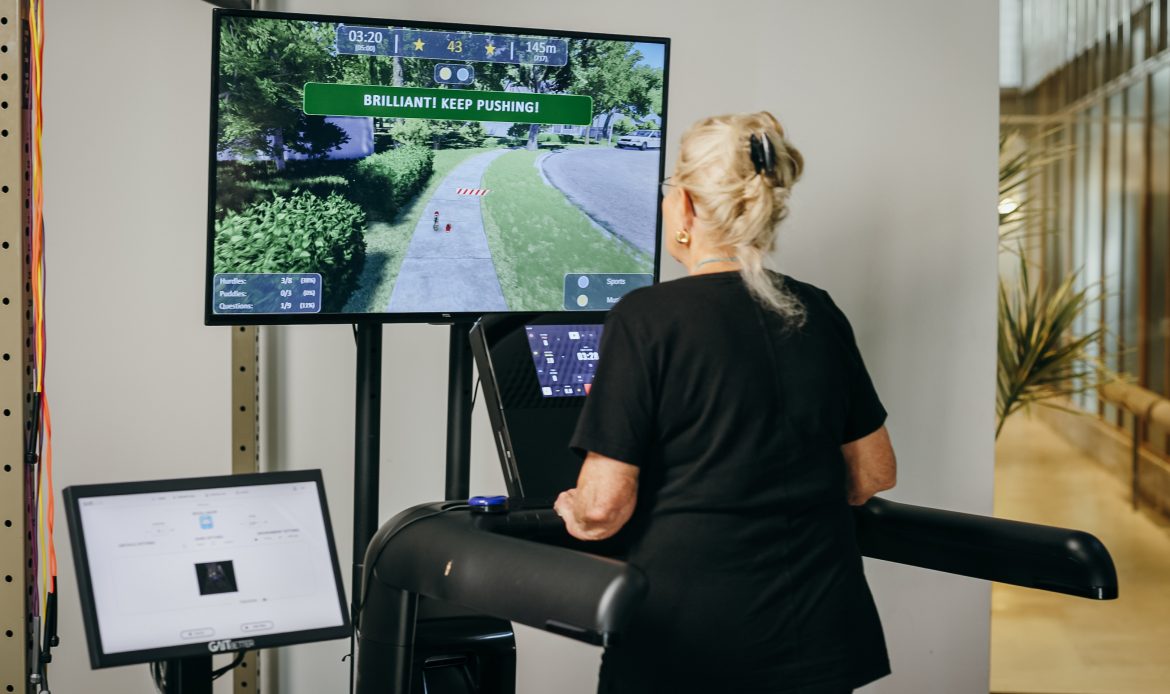
Virtual Simulation can provide a structured way to introduce realistic visual environments and interactive tasks into gait training.
With a suitable clinical system, patients can practise walking while responding to virtual obstacles, navigating environments and completing tasks that require attention and movement coordination.
This can give therapists additional ways to challenge and observe functional mobility in a controlled setting.
GaitBetter combines treadmill-based walking with non-immersive visual environments and cognitive-motor challenges. Its technology is designed to help rehabilitation professionals train walking, balance and cognitive-motor integration through personalized exercises.
For clinics looking to expand their fall prevention services, this type of training offers another approach to complement established rehabilitation practices.
5. Make the Home and Living Environment Safer
Even when an older adult has good physical abilities, environmental hazards can contribute to falls.
A home safety review can identify practical changes that make everyday movement safer.
Important measures include:
- Removing loose rugs and other trip hazards.
- Keeping hallways and frequently used routes clear.
- Improving lighting, particularly on stairs and between bedrooms and bathrooms.
- Installing secure handrails on stairs.
- Adding grab bars near toilets and in bathing areas.
- Using suitable, well-fitting footwear with nonslip soles.
- Ensuring frequently used items are within comfortable reach.
Occupational therapists and other qualified professionals can help assess the home environment and recommend modifications suited to an individual’s needs.
For senior living communities, regular environmental reviews can also help identify hazards in communal spaces, corridors, bathrooms and outdoor walking areas.
6. Review Medications, Vision and Other Health Factors
Fall prevention should not be limited to exercise and mobility training. Medical factors can also influence stability and safety.
Some prescription and over-the-counter medications may cause side effects such as dizziness, drowsiness or blurred vision. Older adults should discuss these effects with their doctor or pharmacist, who can review medications and consider whether adjustments are appropriate. Medication should never be stopped or changed without professional guidance.
Regular eye examinations can help identify vision problems that affect navigation and balance. Healthcare professionals may also evaluate blood pressure changes, foot problems, bone health and other conditions relevant to an individual’s fall risk.
A coordinated approach can help ensure that physical rehabilitation is supported by appropriate medical care.
The CDC provides additional guidance in its fall prevention recommendations.
7. Build a Proactive Fall Prevention Program
For healthcare providers and senior living organizations, individual interventions are most useful when they form part of a consistent, proactive strategy.
An effective program should include several core elements:
Early identification: Establish a process for recognizing residents or patients who may benefit from further assessment.
Individualized assessment: Consider fall history, gait, balance, strength, cognitive-motor function, medication factors and environmental hazards as appropriate.
Targeted intervention: Match exercise, rehabilitation and environmental changes to each person’s identified needs.
Ongoing monitoring: Review progress and adapt interventions as mobility, confidence and functional abilities change.
Patient engagement: Help older adults understand the purpose of training and participate in setting realistic mobility goals.
Outcome evaluation: Track relevant measures such as functional mobility, balance performance, participation and falls over time.
Organizations should select interventions supported by appropriate evidence and use consistent methods to evaluate their effectiveness.
For community-based providers, evidence-based programs can also help establish a structured approach to delivering fall prevention services.
8. Support Confidence as Well as Physical Ability
Fear of falling can influence how older adults move through the world.
Some individuals become hesitant to walk outdoors, use stairs or participate in social activities after experiencing a fall. Others may limit their activity because they feel unsteady, even if they have never sustained an injury.
Although caution can sometimes be appropriate, excessive activity restriction may contribute to deconditioning and reduced independence.
A person-centered fall prevention program should therefore consider confidence alongside physical performance.
Gradually progressing exercises, appropriate supervision and achievable goals can help individuals practise challenging movements in a safe environment. Encouraging participation and recognizing improvements may also support engagement with rehabilitation.
The ultimate objective is to help older adults maintain the skills and confidence they need for everyday life.
How GaitBetter Supports Fall Prevention
GaitBetter develops technology designed to support gait rehabilitation and fall prevention through motor-cognitive treadmill training.
The system combines walking practice with interactive virtual environments, allowing healthcare professionals to introduce cognitive and movement challenges in a controlled setting.
For rehabilitation clinics and senior living organizations, this approach can complement conventional exercise and balance interventions while providing additional ways to engage patients in functional gait training.
GaitBetter’s community-focused gaitACTIVE program is designed to support mobility and fall prevention among older adults. In July 2026, gaitACTIVE was accepted into the National Council on Aging’s Evidence-Based Programming, expanding opportunities for eligible community organizations to implement the program.
Organizations interested in developing or expanding their fall prevention services can explore how GaitBetter may fit within their existing clinical or community programs.
Learn more about GaitBetter’s solutions: Explore GaitBetter.
Conclusion: A More Comprehensive Approach to Fall Prevention
Preventing falls among older adults requires more than a single test or intervention. It calls for an individualized approach that considers physical ability, cognitive-motor function, medical factors, the environment and confidence in everyday movement.
By identifying potential risks early, improving strength and balance, incorporating appropriate gait training and addressing environmental and medical contributors, healthcare providers can help older adults work toward safer mobility and greater independence.
For physical therapists, rehabilitation clinics and senior living communities, the opportunity is to move beyond reacting to falls and develop proactive programs that support mobility throughout the aging process.
Combining established prevention strategies with innovative approaches to gait and cognitive-motor training can help providers build more comprehensive services around the needs of older adults.
Interested in learning how GaitBetter can support your fall prevention program? Contact our team to request a demo.
Disclaimer: This article is for educational purposes and is not a substitute for individualized medical advice or professional fall risk assessment. Fall prevention interventions should be selected according to each individual’s needs and abilities.